Apply for the Right Credit Card for You
Choose a Card That Matches Your Lifestyle
Enter your details to find eligible options in minutes.

What is a Credit Card ?
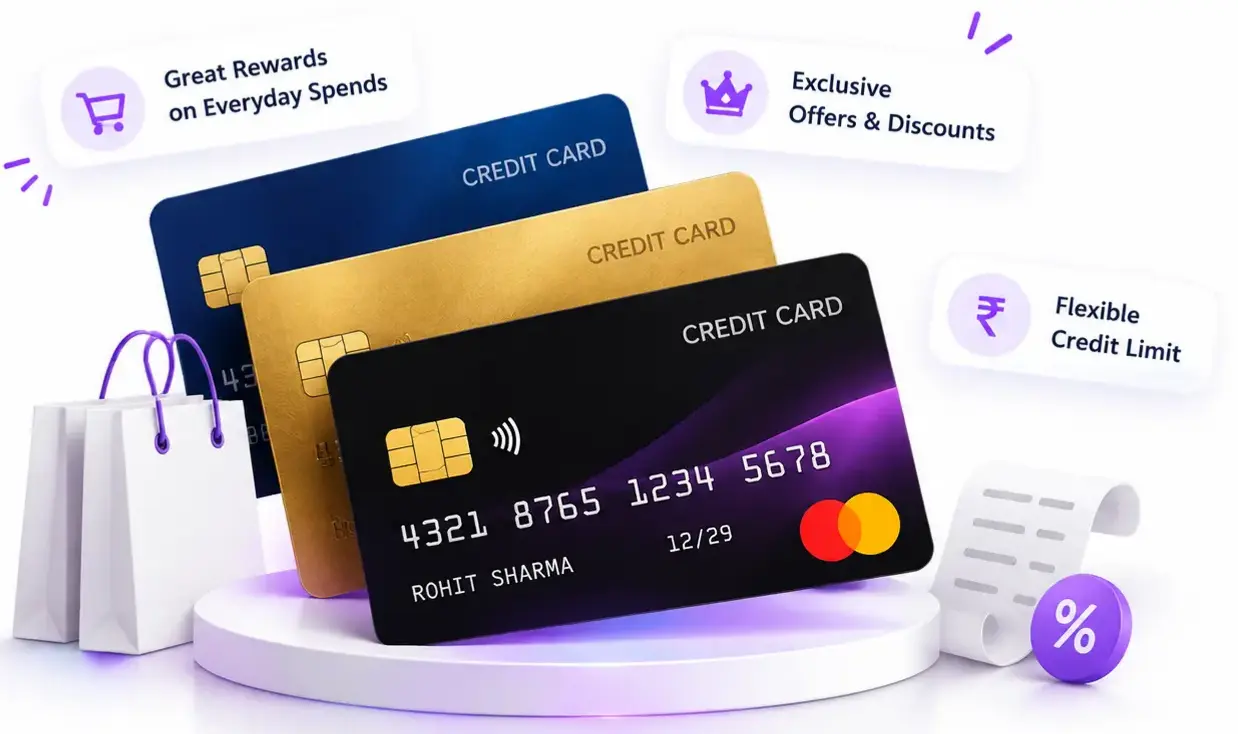
A credit card is a financial tool issued by financial institutions that helps you buy things and make purchases, even if you do not have enough money in your bank account. It provides a predetermined credit limit that you can use for various expenses. It has lots of offers, discounts, cashback, and rewards, and can also provide access to funds during emergencies.
Best Credit Cards in India
Here is a list of the best credit cards you can choose from based on your needs and requirements. Before applying for a card, check its terms and conditions.
IDFC FIRST Mayura Credit Card
Best For
Key Benefits
- Get 12,000 reward points as a joining benefit
- Earn up to 30X reward points on hotel bookings
- 10X reward points on credit card purchases
- Interest-free ATM cash withdrawals for up to 45 Days
- 4 complimentary airport lounge visits at Indian and international airports
- Up to ₹50,000 in trip cancellation cover
Fees & Charges
Joining Fee
₹5,999 + GST
Annual Fee
₹5,999 + GST
Foreign Transaction Fee
0% on foreign transactions
IDFC FIRST Select Credit Card
Best For
Key Benefits
- Get up to 10X reward points that never expire
- Free airport and railway lounge access
- Up to 20% Dining Discounts at 1,500+ restaurants
- Buy 1, Get 1 movie tickets twice a month
- Up to ₹10,000 Trip Cancellation Cover
Eligibility
- Income: ₹12 lakh+ per year
IDFC FIRST Classic Credit Card
Best For
Key Benefits
- Withdraw interest-free cash from an ATM for up to 45 days
- 10X reward points on dining, travel, international purchases, and birthday spends
- Get up to 25% off on movie tickets, District app
- Convert your transactions into EMIs for convenient repayment
- Enjoy 4 complimentary railway lounge visits per quarter in India
Eligibility
- Annual income of ₹3 lakh or more
Fees & Charges
Joining Fee
₹0 for the first year
Annual Fee
₹199 + GST
Foreign Transaction Fee
0% on foreign transactions
IDFC FIRST Millennia Credit Card
Best For
Key Benefits
- No interest on ATM withdrawals for up to 45 days
- Earn 10X reward points for every spend on travel, dining, and birthday spends
- Options for activating UPI
- ₹2 lakh personal accident cover
Eligibility
- Annual income of ₹3 Lakh or More
IDFC FIRST Wealth Credit Card
Best For
Key Benefits
- Up to 10X reward Points on eligible spends
- Get ₹1,000 cashback on your first eligible EMI
- Free airport lounge and spa access in India and abroad
- Buy 1, get 1 movie ticket up to ₹500, twice a month
- ₹1 crore air accident cover for travel protection
Eligibility
- Annual income: ₹36 lakh or more
IDFC FIRST WOW! Credit Card
Best For
Key Benefits
- Interest-free ATM cash withdrawal for up to 48 days
- 4X reward points on international spends and online and offline purchases
- Enjoy interest-free ATM cash withdrawals for up to 48 days
- Get reward points that never expire
Eligibility
- Age: 18 to 80 years
- Indian resident with a minimum balance of ₹20,000 in an IDFC FIRST Bank account
- Minimum NRE fixed deposit of ₹25,000 with IDFC FIRST Bank
- No income proof is required
IDFC FIRST EARN Credit Card
Best For
Key Benefits
- Up to 1% cashback on UPI spends using the IDFC FIRST Bank mobile app
- Get 0.5% cashback on UPI and online spends
- Earn 0.5% cashback on utility, insurance, and wallet payments
- Earn interest on your fixed deposit
Eligibility
- Age: 18 to 80 years
- Indian resident with a permanent residential address in India
- Security: Minimum fixed deposit of ₹5,000 with IDFC FIRST Bank
Fees & Charges
Joining Fee
₹0
Annual Fee
₹499 + GST
Foreign Transaction Fee
0% on foreign transactions
IDFC FIRST Hello Cashback Credit Card
Best For
Key Benefits
- Get up to 45 days of interest-free ATM cash withdrawals
- 3%–5% cashback on online spends of ₹10,000 and above
- ₹2 lakh personal accident cover
- Enjoy a 1% fuel surcharge waiver of up to ₹100
- Get free roadside assistance up to four times a year
Eligibility
- Age: 18 to 80 years
- Income: No income proof required
- Indian resident with a permanent residential address in India
- Minimum fixed deposit of ₹10,000
Fees & Charges
Joining Fee
₹0 until October 30, 2026
Annual Fee
₹0 for the first year
Foreign Transaction Fee
0% on foreign transactions
IDFC FIRST HPCL Power+ Credit Card
Best For
Key Benefits
- Save up to 6.5% on HPCL fuel spends
- Get 5% savings in rewards on grocery, utility, and FASTag spends
- Get 3X reward points on UPI and retail purchases
- Get free roadside assistance
- Enjoy interest-free ATM cash withdrawals for up to 45 days
- Get personal accident cover of ₹2 lakh
Eligibility
- Age: 21 years or older; must be an Indian citizen
- Annual income of ₹3 lakh or more
Fees & Charges
Joining Fee
₹499 + GST
Annual Fee
₹499 + GST
Foreign Transaction Fee
0% on foreign transactions
IDFC FIRST Ashva Credit Card
Best For
Key Benefits
- Get 2,500 reward points as a joining benefit
- Enjoy four complimentary airport lounge visits in India and two abroad per quarter
- Get trip cancellation cover of up to ₹25,000 for two claims
- Earn 10X reward points on spends above ₹20,000
- Enjoy a premium metal card with a distinctive design
Important Credit Card Terms to Understand
Some credit card terms can be confusing. Keep these terms in mind and understand the key terms you need to know before applying for a credit card to help you avoid financial issues.
Billing Cycle
The billing cycle is the date range (usually around 29–31 days) during which all your credit card transactions are recorded and included in your statement.
Example: You spent ₹5,000 on August 1 and ₹6,000 on August 20. If your billing cycle is from August 1 to August 31, both transactions will be included in the statement generated on August 31. Your total bill will be ₹11,000.
Grace period
It is the period between the date your bill is generated and the due date by which you need to pay the amount you spent.
Example: Your bill is ₹11,000, and you have 20 days to repay it by the due date. This period is called the grace period, during which you generally do not pay interest if you pay the full amount on time.
Due Date
This is the last day to repay the amount you have spent using your credit card. If you miss the due date, you may have to pay interest based on the bank’s terms and conditions.
Example:Your credit card bill is ₹11,000, and the due date is September 20. You should pay the full amount by the due date to avoid interest and late payment charges..
Lifetime-Free Credit Card (LTF)
It is a card provided by a financial institution with no annual fee for the lifetime of the card. But a lifetime-free card does not mean it is entirely free. Some cards may also have minimum annual spending requirements to use that credit card entirely free.
Credit Utilization Ratio
It is the percentage of the amount you spend from your credit limit. If your credit limit, which is the maximum amount provided by the bank, is ₹1 lakh and you spend ₹40,000, your credit utilization ratio is 40%.
Credit Card Type
There are many credit cards available for different purposes, such as fuel, shopping, travel, dining, groceries, and more. Each card is designed for a different purpose, so choose one based on your needs and preferences to get the best benefits.
Benefits of choosing Hello Credit for your credit card
Get a Credit Card Based on Your Income
Find a credit card that matches your income and financial profile.
Get the Card That Fits Your Lifestyle
Choose a credit card with options for travel, fuel, shopping, cashback, and more.
Common Mistakes to Avoid When Getting or Using a Credit Card
We have listed some serious mistakes to avoid before and after getting a credit card. Ignoring them could lead to financial losses.
Don’t Pay the Minimum Amount Due
Try to pay the full amount due by the due date. Carrying an unpaid balance on your credit card can increase the total repayment amount because of high interest charges.
Set Reminders for Your Due Dates
If you have multiple credit cards, set reminders for each card’s due date. Missing a payment on a card with an outstanding balance of ₹1 lakh may lead to interest and other applicable charges.
Check the Terms of Lifetime-free Cards
Lifetime-free cards generally do not charge an annual fee, but some may have spending requirements or other conditions. Always check the card's terms and conditions for applicable charges.
Keep Your Spending Low
Keeping your credit utilization ratio low may help you maintain a higher CIBIL score. Higher utilization can lower your CIBIL score and make it harder to obtain a loan during an emergency.
Get a Card Based on Your Lifestyle
Every credit card is designed to suit different needs, such as travel, daily purchases, first-time users, and fuel spending. Choose a card that matches your spending habits and financial goals.