Merge all your loans into one with a Debt Consolidation loan
Debt Consolidation Loans
Enter your details to find eligible loan options in minutes.
Overview of Debt Consolidation
What Is a Debt Consolidation Loan and How Does It Work?
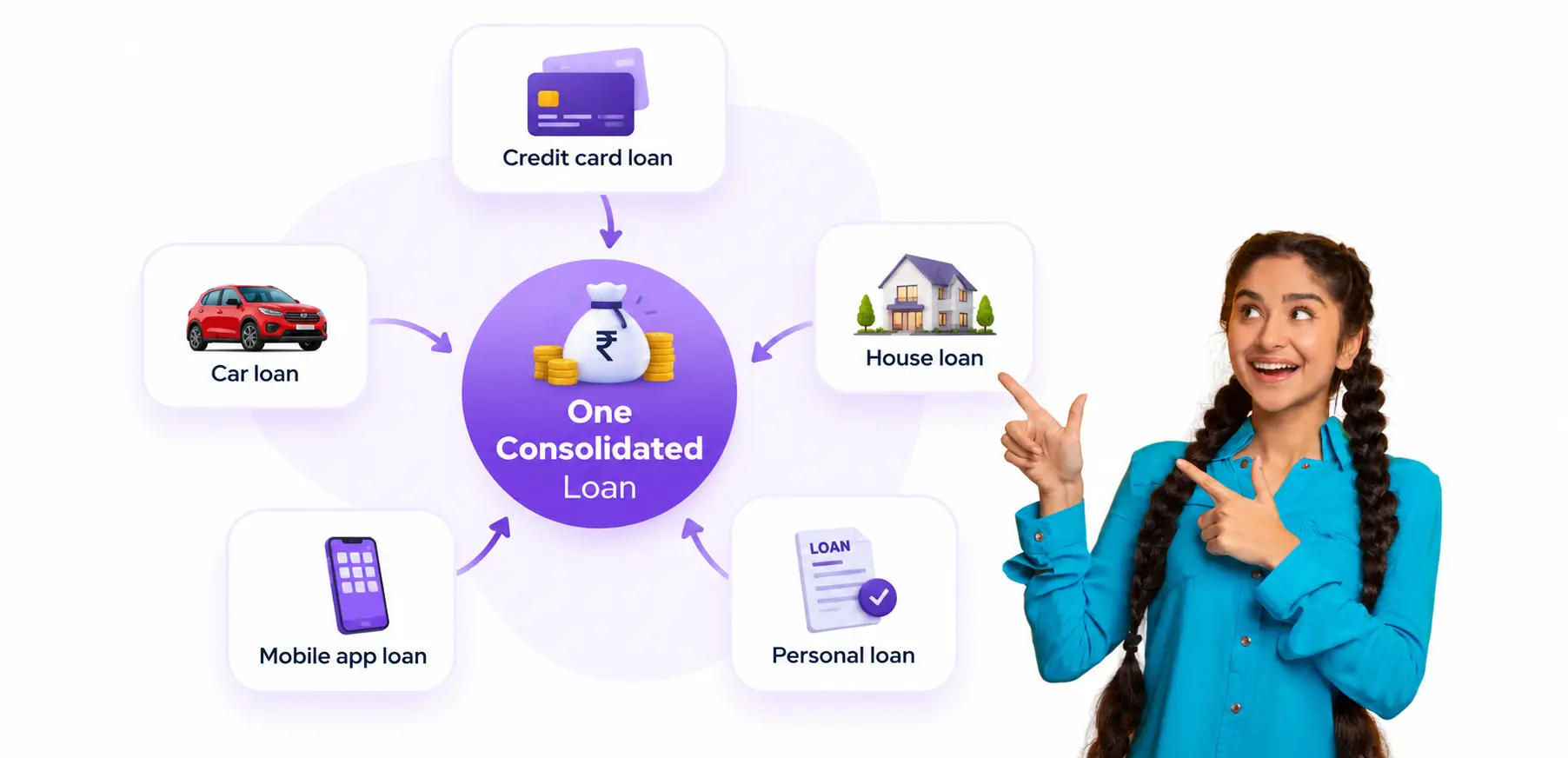
In simple terms, debt consolidation means taking a new loan to close existing loans, such as EMIs, payday loans, app loans, personal loans, credit card debt, and more, to reduce interest rates, lower monthly EMI burdens, adjust loan tenures, and manage multiple loans more easily.
Note: Your existing loans will not be closed automatically. Once the new loan amount is credited to your account, you are responsible for closing the old loans.
Example for Better Understanding
Here is an example of how debt consolidation can help compare and reduce the total interest paid on multiple loans by combining them into a single loan with a fixed repayment tenure.
Outstanding loan amount
₹1,50,000
Interest rate per month
28% per month
Repayment tenure
10 months
Interest paid as per repayment tenure
₹1,50,000
Outstanding loan amount
₹1,50,000
Interest rate per month
18% per annum
Repayment tenure
5 years
Interest paid as per repayment tenure
₹78,541
Outstanding loan amount
₹5,00,000
Interest rate per month
12% per annum
Repayment tenure
10 years
Interest paid as per repayment tenure
₹3,60,826
Outstanding loan amount
₹8,00,000
Interest rate per month
Repayment tenure
Interest paid as per repayment tenure
₹5,89,367
How Debt Consolidation Works
As per the above example, the applicant has an outstanding loan amount of ₹8,00,000 and will pay ₹5,89,367 in interest over the entire loan tenure. Instead of managing multiple loans with different interest rates and repayment tenures, you can combine them into a single personal loan, as shown in the example below.
Loan amount
₹8,00,000
Interest rate
12% per annum
Repayment tenure
5 years
Interest paid
₹2,67,733
Tips: Use an EMI calculator to check how much interest you are paying on your existing loan and compare it with the new loan to determine whether the new loan will be beneficial.
Before and After Debt Consolidation
Here is a before-and-after comparison showing how much a person can save by consolidating their loans into a single debt consolidation loan.
Before debt consolidation
₹8,00,000
After debt consolidation
₹8,00,000
Before debt consolidation
₹5,89,367
After debt consolidation
₹2,67,733
Before debt consolidation
Different tenures
After debt consolidation
5 years
Before debt consolidation
₹13,89,367
After debt consolidation
₹10,67,733
Before debt consolidation
—
After debt consolidation
₹3,21,634
By consolidating ₹8,00,000 in existing loans into a single loan at 12% p.a. for 5 years, you could save up to ₹3,21,634 in interest and manage repayments through a single monthly EMI.
Note: The amount you save depends on your interest rate and repayment tenure, as well as processing fees and other charges. Before taking a loan, cross-check these details.
What are the Pros and cons of Debt Consolidation?
When it comes to debt consolidation, there are pros and cons you should know before taking a loan.
Pros of Debt Consolidation
1. Combine Multiple Interest Rates
Consolidate multiple debts with different interest rates into a single loan with one repayment schedule. Compare annual interest rates and charges before choosing a loan.
2. Save on Interest
A consolidation loan with a lower interest rate may reduce your total borrowing cost. As illustrated in the example above, savings could reach ₹3,21,634, depending on the loan terms, fees, and repayment period.
3. Move Away from Payday Loans
Borrowers managing expensive short-term or mobile app loans may be able to replace them with a more manageable consolidation loan, subject to eligibility and affordability.
4. Flexible Loan Tenure
Choose a repayment tenure based on the options offered by your lender and your budget. A longer tenure may reduce your monthly EMI but increase the total interest paid.
5. Convert Multiple EMIs into One
Combining eligible debts into one loan simplifies monthly repayments, reduces the need to track multiple due dates, and makes budgeting easier.
Cons of Debt Consolidation
1. Existing Loans May Remain Unpaid
If you take a consolidation loan but do not use the funds to clear your existing debts, you could end up managing both the new loan and the old repayments.
2. Risk of a Higher Interest Rate
Choosing a loan with a higher effective interest rate may defeat the purpose of consolidation. Compare the total repayment amount, annual rate, and applicable closure costs.
3. Additional Fees and Charges
Processing fees, documentation charges, foreclosure costs, and other applicable fees may reduce your savings. Review the total cost before making a decision.
4. May Affect Your CIBIL Score
Multiple loan applications within a short period may result in several hard inquiries and could affect your credit score. Check your eligibility and compare suitable offers before submitting formal applications.
What Are the Eligibility Criteria for a Debt Loan Consolidation?
Here, we have listed the eligibility criteria for applying. Meeting these criteria will help improve your chances of loan approval.
- Age : 23-55
- CIBIL score : A minimum score of 650 is required.
- Employment Type : Salaried, self-employed, and business owners can apply.
- Salary : Salaried applicants must have a minimum monthly salary of ₹25,000; self-employed applicants must have a minimum bank balance of ₹3,000; and business owners need to have ITRs for the last 3 years. This may vary depending on the loan amount.
- Pending payments : There should not be any overdue or missed payments
What Are the Documents Required for Debt Consolidation?
These are the key documents required to pay off existing loans and take out a new loan.
- Updated CIBIL report : The CIBIL report is used to analyse your borrowing history, repayment behaviour, overdue payments, the number of active loans, loan applications, and more.
- Salary slips : Salaried applicants need to provide salary slips for the last 3–6 months.
- Bank statement : Self-employed applicants need to submit their bank statements.
- Income Tax Return (ITR) : Business owners need to submit their ITRs for the last 3 years.
- Verification documents : Aadhaar card, PAN card, driving licence, voter ID, or electricity bill.
Is Debt Consolidation Right for You? With a case study.
Before applying for a loan, double-check whether it's really needed for you. Here are the common reasons people go for a debt consolidation loan.
Reasons People Choose Debt Consolidation
1. Mobile App Loans
Managing multiple mobile app loans can become difficult, particularly when borrowing costs are high. Some borrowers may also experience repeated repayment reminders, adding to their financial pressure. A suitable consolidation loan may help combine eligible outstanding balances into a single repayment.
2. Payday Loans
Payday loans are short-term borrowings often used for urgent financial needs. Managing multiple accounts with different repayment dates and borrowing costs can make repayment difficult. Consolidation may simplify repayments if the new loan is affordable and offers better overall terms.
3. Reduce the Interest Rate
If your existing debts carry high interest rates, a consolidation loan with a lower effective annual rate may reduce borrowing costs. Compare processing fees, foreclosure charges, and total repayment amounts before deciding.
4. Reduce or Increase Your Monthly EMI
A longer repayment tenure may reduce your monthly EMI and ease cash-flow pressure. Alternatively, choosing a shorter tenure or paying a higher EMI, if affordable, may help you repay the loan sooner and reduce total interest.
5. Simplify Loan Management
Tracking several loan balances, payment dates, and lenders can be confusing. Consolidating eligible debts into one loan can simplify monthly budgeting and make repayments easier to manage.
Debt Consolidation Case Study: An Applicant's Example
An applicant approached Hello Credit seeking a debt consolidation loan to manage high-cost app loans and simplify monthly repayments. The following example outlines the applicant's reported financial details and the proposed consolidation loan.
Applicant's Loan Details
- App Loans and Payday Loans: ₹7.45 lakh across 15 loan accounts, with reported interest rates of 20–30% per month.
- Commercial Bank Loan EMI: ₹44,000 per month.
- Overdue Payments: No overdue payments reported.
- CIBIL Score: 720.
- Monthly Salary: ₹1,20,000.
Debt Consolidation Loan Details
- Loan Amount: ₹10 lakh.
- Interest Rate: 16% per annum.
- Loan Tenure: 5 years.
- Loan Disbursement Date: August 7, 2026.
By consolidating 15 app loans with interest rates of 20–30% per month into a single ₹10 lakh loan at 16% per annum, the applicant replaced multiple high-interest app loans with a lower-interest loan, potentially saving a significant amount on interest payments.
How to Apply and Get a Debt Consolidation Loan from Hello Credit?
We make everything simpler and easier to avail of a loan.
- Click the Apply Now button below and share the requested details, including your name, mobile number, required loan amount, email address, and employment type.
- Our team will contact you by phone or WhatsApp to understand your requirements, assess your preliminary loan eligibility, and guide you through the required documentation.
- If you meet the lender's eligibility criteria, we will explain the available loan offers, including the lender, loan amount, interest rate, repayment tenure, EMI, processing fees, and other applicable charges.
- Once the application is approved and the lender completes its verification and disbursement process, the respective lender will disburse the approved loan amount to your bank account, subject to its terms and conditions.
How Debt Consolidation and Debt Settlement are Different
Many people confuse debt consolidation with debt settlement. Here is a brief explanation of both.
What Is Debt Settlement?
If you are unable to repay your loan in full, you may approach your lender to negotiate a reduced repayment amount. If the lender accepts the proposal and the agreed amount is paid according to the terms, the account may be reported as "Settled" rather than "Closed".
Example: If you have an outstanding debt of ₹1 lakh and your lender agrees to accept ₹50,000 as a settlement, the account may be marked as "Settled" after you fulfil the agreed terms. The remaining amount is handled according to the settlement agreement.
What Are the Consequences of a "Settled" Status?
A "Settled" status may appear on your credit report and indicate that you did not repay the full amount originally owed. Lenders may consider this information when assessing future credit applications, which can affect your chances of approval or the terms offered. The impact varies depending on your overall credit history and the lender's assessment.
What Is Debt Consolidation?
Debt consolidation involves combining multiple outstanding loans into a single new loan. Depending on the interest rate, fees, and repayment tenure, it may help simplify monthly payments, reduce borrowing costs, or make repayments more manageable. Unlike settlement, consolidation generally involves repaying the existing debts through the new loan rather than negotiating to pay less than the amount owed.
How Can You Avoid Falling into Debt Again After Debt Consolidation?
The guide below will help you avoid falling into debt after debt consolidation.
- Repay Your Existing Loans Use the consolidation funds to clear the debts included in your plan. Confirm that the relevant balances have been settled with the respective lenders to avoid carrying both old and new debt.
- Avoid High-Cost Mobile App and Payday Loans Avoid relying on expensive short-term borrowing to cover regular expenses, as this can increase your repayment burden.
- Pay Your Credit Card Bills on Time Pay your bills by their due dates and, where possible, clear the full statement balance to avoid interest and late payment charges.
- Limit Frequent Loan Applications Compare suitable offers and check eligibility before applying. Multiple applications in a short period may result in repeated hard inquiries and could affect your CIBIL score.
- Create a Monthly Budget Track your income, essential expenses, savings, and EMIs. Allocate funds for repayments before making discretionary purchases.
- Use Credit Cards Responsibly Avoid excessive spending and keep your outstanding balance manageable, especially if you cannot repay it in full each month.
- Build an Emergency Fund Set aside savings regularly to cover unexpected medical, household, or other essential expenses without taking another loan.
- Pay Your Loan EMIs on Time Set payment reminders or automatic payments where suitable. Consistent, timely repayments help maintain a positive repayment history and support your credit profile.
- Borrow Only When Necessary Before taking another loan, assess whether the expense is essential and whether the additional EMI fits comfortably within your budget.